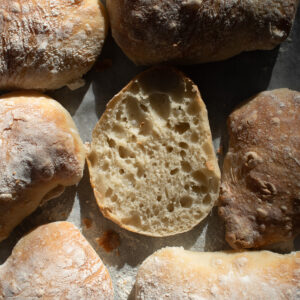
Sourdough Discard Ciabatta rolls
These Sourdough Discard Ciabatta Rolls are light, airy, and perfectly chewy with a crisp golden crust. Made with a high-hydration dough and a touch of yeast, they’re an easy way to get bakery-style ciabatta rolls at home.
Equipment
- Large mixing bowl (or stand mixer with dough hook attachment)
- Bench scraper
- Parchment Paper
- Baking sheet
- Metal baking pan (for steam)
Ingredients
- 500 g bread flour
- 120 g sourdough discard
- 400 g warm water
- 10 g fine sea salt 1 ¾ teaspoons
- 5 g instant yeast or active dry yeast proofed (1 ½ teaspoons)
- 15 g olive oil 1 tablespoon
Instructions
- Mix the dough: In a large bowl, combine the flour, salt, and yeast. Add the warm water, sourdough discard, and olive oil, then mix until a shaggy, very wet dough forms.
- Rest: Cover and let the dough rest for 30 minutes.
- Stretch and fold: With wet hands, perform a set of stretch and folds. Cover and rest for 30 minutes, then repeat 2–3 more times until the dough becomes smoother and more elastic.
- Bulk rise: Cover and let the dough rise at room temperature for 1–2 hours, until puffy and jiggly.
- Shape: Turn the dough out onto a heavily floured surface. Then dust both your hands AND the dough with flour. Gently stretch it into a rectangle without deflating, then use a bench scraper to cut it into 8 rolls.
- Final rest: Transfer to a parchment-lined baking sheet and let rest for 30–45 minutes while the oven preheats.
- Bake: Preheat oven to 450°F with a metal pan on the bottom rack. When ready to bake, carefully pour 1 cup of hot water into the pan to create steam, then bake the rolls for 20-25 minutes or until golden brown.
- Cool: Let the rolls cool before slicing to allow the crumb to set.
Notes
High-hydration dough: This ciabatta dough is intentionally very wet. Avoid adding extra flour to the dough itself or the rolls may turn dense instead of airy.
Active dry yeast: If using active dry yeast, dissolve it in the warm water (105–110°F) and let it foam before mixing.
Steam baking: Steam in the oven is essential for achieving a crisp crust and good oven spring. Don’t skip this step.
Handling the dough: Be gentle when shaping to preserve the air bubbles that create that classic ciabatta texture.
Flouring the surface: Use plenty of flour on your work surface and hands to prevent sticking without altering the dough.
Overnight option: You can refrigerate the dough during bulk fermentation for a slower rise and deeper flavor.
Freezing: These rolls freeze well. Reheat in the oven to restore the crust.
Nutrition
Serving: 1gCalories: 267kcalCarbohydrates: 51gProtein: 9gFat: 3gSaturated Fat: 0.4gPolyunsaturated Fat: 1gMonounsaturated Fat: 1gSodium: 486mgPotassium: 63mgFiber: 2gSugar: 0.2gVitamin A: 1IUCalcium: 10mgIron: 1mg
Tried this recipe?Let us know how it was!
