
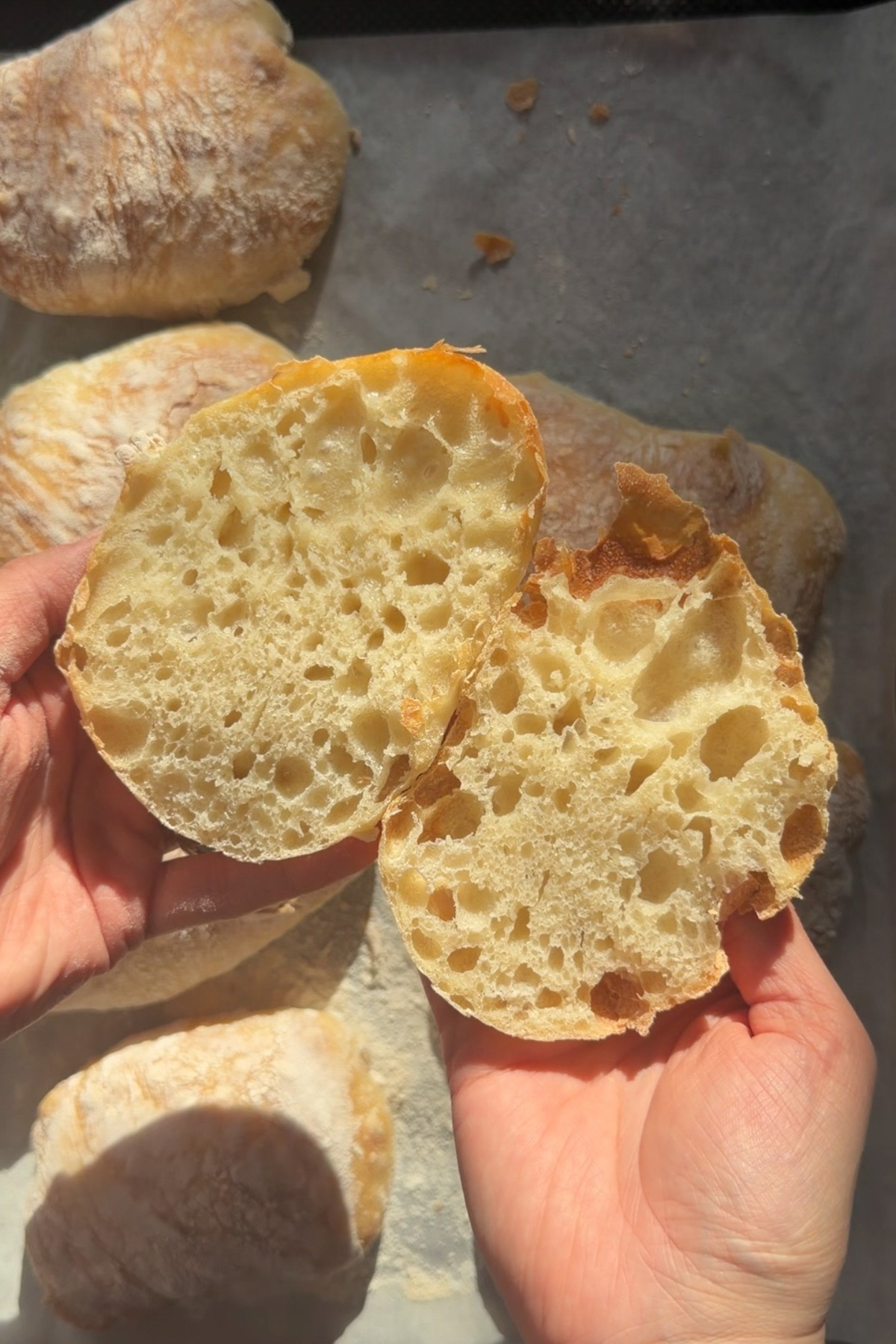
My Sourdough Discard Ciabatta Rolls are everything a roll should be — light, airy, chewy, and golden-edged in all the right places, similar to my sourdough discard focaccia bread.
If you love sourdough discard bread baking, my sourdough discard sandwich bread is the everyday loaf version of this same philosophy. And if you're looking for something a little softer and more enriched, my sourdough discard garlic butter dinner rolls and sourdough pull-apart bread are a great next stop.
Quick Look: Sourdough Discard Ciabatta Rolls
Ready In: About 3 hours (mostly hands-off)
Bake Time: 20–25 minutes
Makes: 8 rolls
Calories: 267 per roll
Main Ingredients: Bread flour, sourdough discard, olive oil, instant yeast.
Dietary Info: Vegan, dairy-free.
Why You'll Love It: Bakery-style ciabatta rolls with a crisp, crackly crust and an open, chewy crumb; made with discard you'd otherwise toss and no special skills required.
SUMMARIZE & SAVE THIS CONTENT ON
Why you'll love this recipe
- Reliable rise every time. Because we're using a small amount of yeast alongside the discard, the rise is consistent even if your discard isn't particularly active. Self-taught bakers deserve predictable results.
- That crumb. The whole point of ciabatta is the open, irregular air pockets — and this recipe delivers them reliably because the high-hydration dough and gentle handling preserve the bubbles that form during fermentation. Don't rush the folds and don't overwork the dough.
- A good use for your discard. Instead of tossing your unfed sourdough discard, you're folding it into a dough where it adds genuine depth of flavor and keeps the crumb tender. Same discard-first approach behind my sourdough discard burger buns and easy sourdough discard hotdog buns.
- Steam baking is the move. Pouring hot water into a pan at the bottom of the oven creates steam that keeps the crust from setting too fast — which is exactly what gives you that big oven spring and the crackly, golden exterior you're after. It sounds fancier than it is.
- Wildly versatile. Sandwiches, soup-dipping, charcuterie boards, or just torn apart warm over the sink because you earned it. These rolls fit every occasion from a holiday bread basket to a Tuesday night pasta situation.
Jump to:
- Quick Look: Sourdough Discard Ciabatta Rolls
- Why you'll love this recipe
- Ingredients You'll Need
- Easy Substitutions & Variations
- How To Make Sourdough Discard Ciabatta Rolls
- Expert Tips
- What Makes This Recipe Special?
- Sourdough Discard Ciabatta Rolls FAQ
- Troubleshooting Guide
- Storage
- Other Sourdough Discard Recipes to Consider
- Sourdough Discard Ciabatta rolls
Ingredients You'll Need
- bread flour: The higher protein content of bread flour builds more gluten than all-purpose, which is what gives ciabatta its signature chew. All-purpose works as a substitute but the rolls will be slightly softer and the crumb less open.
- sourdough discard: Unfed, straight from the fridge is fine. It doesn't need to be active — you're using it for flavor and texture, not lift. The yeast handles the rise.
- warm water: The majority of this recipe by weight. High hydration is what creates the open crumb — this dough is intentionally very wet. Don't be tempted to add less.
- fine sea salt: Flavor and gluten structure. Don't skip it and don't add it directly on top of the yeast before mixing — salt can inhibit yeast activity.
- instant yeast: A small amount for a consistent, reliable rise. If using active dry yeast, proof it in the warm water first until foamy before adding the other ingredients.
- olive oil: Adds a touch of richness and softness to the crumb without weighing it down. Any neutral oil works as a substitute.
See recipe card for quantities.
Easy Substitutions & Variations
- All-purpose flour: Works in place of bread flour for a slightly softer texture and a less open crumb. Still delicious — just a different result.
- Active dry yeast: Use the same amount as instant, but proof it in the warm water first until foamy before mixing.
- Olive oil: Any neutral oil (avocado, vegetable, canola) works as a direct swap.
- Herb rolls: Add 1 tablespoon of chopped fresh rosemary or thyme to the dough when you mix it. Rosemary ciabatta alongside a big pot of soup is one of the great combinations in bread baking.
- Garlic: Mix 2–3 cloves of finely minced garlic into the dough during the first stretch and fold. For a more intense garlic bread situation, my sourdough discard garlic knots are the dedicated recipe.
- Olive: Fold chopped kalamata olives into the dough during the first stretch and fold. The brine adds great flavor to the crumb.
- Overnight bulk rise: Mix the dough, complete the stretch and fold sets, then cover and refrigerate for up to 16 hours for a slower rise and deeper, more developed sourdough flavor. Shape and bake straight from the fridge after a 30-minute rest at room temperature.
How To Make Sourdough Discard Ciabatta Rolls
Note: I bake by weight for accuracy. Cup/tbsp/tsp measurements are approximate and may vary depending on how you scoop.
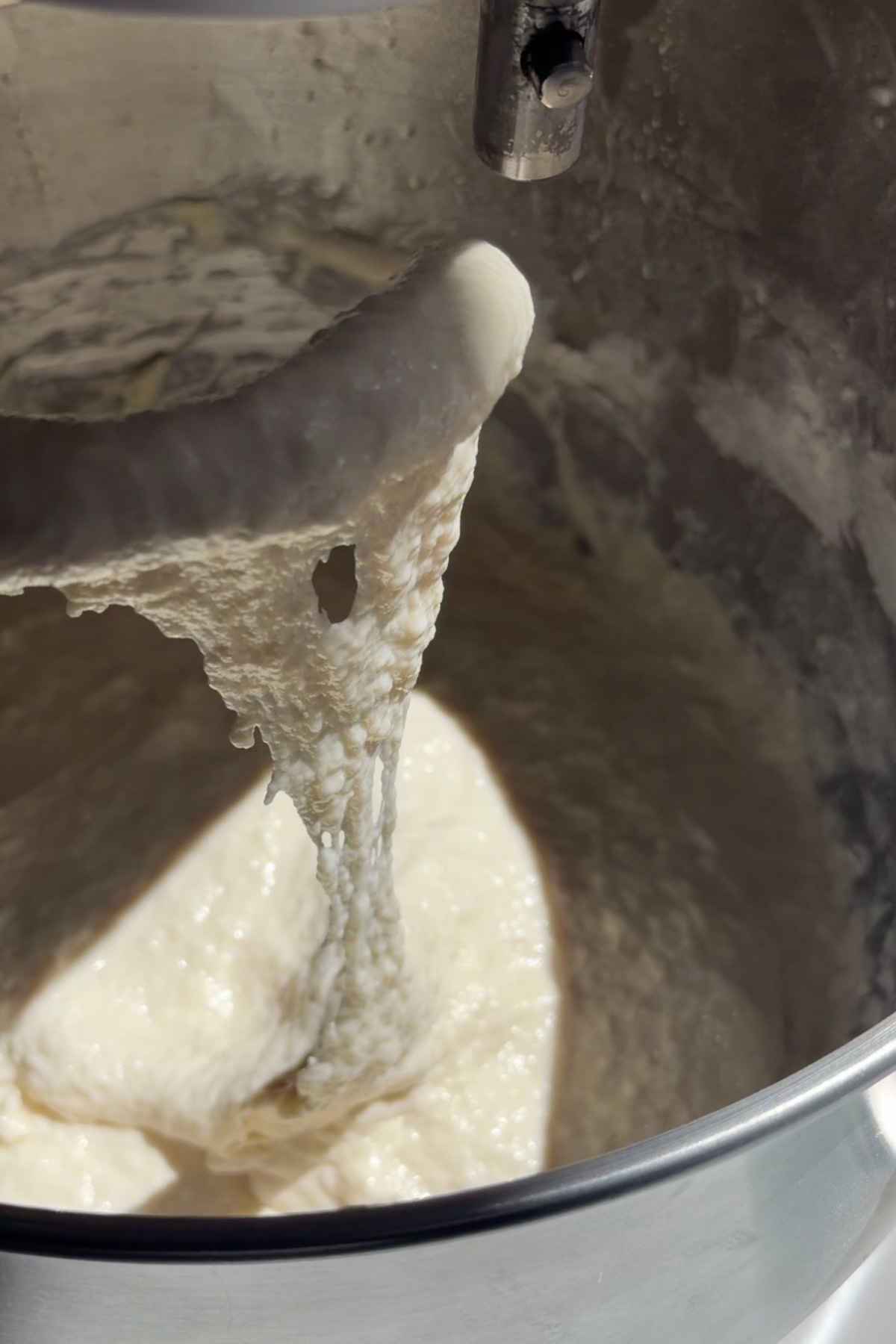
Step 1: Mix: Combine into a shaggy, wet dough.
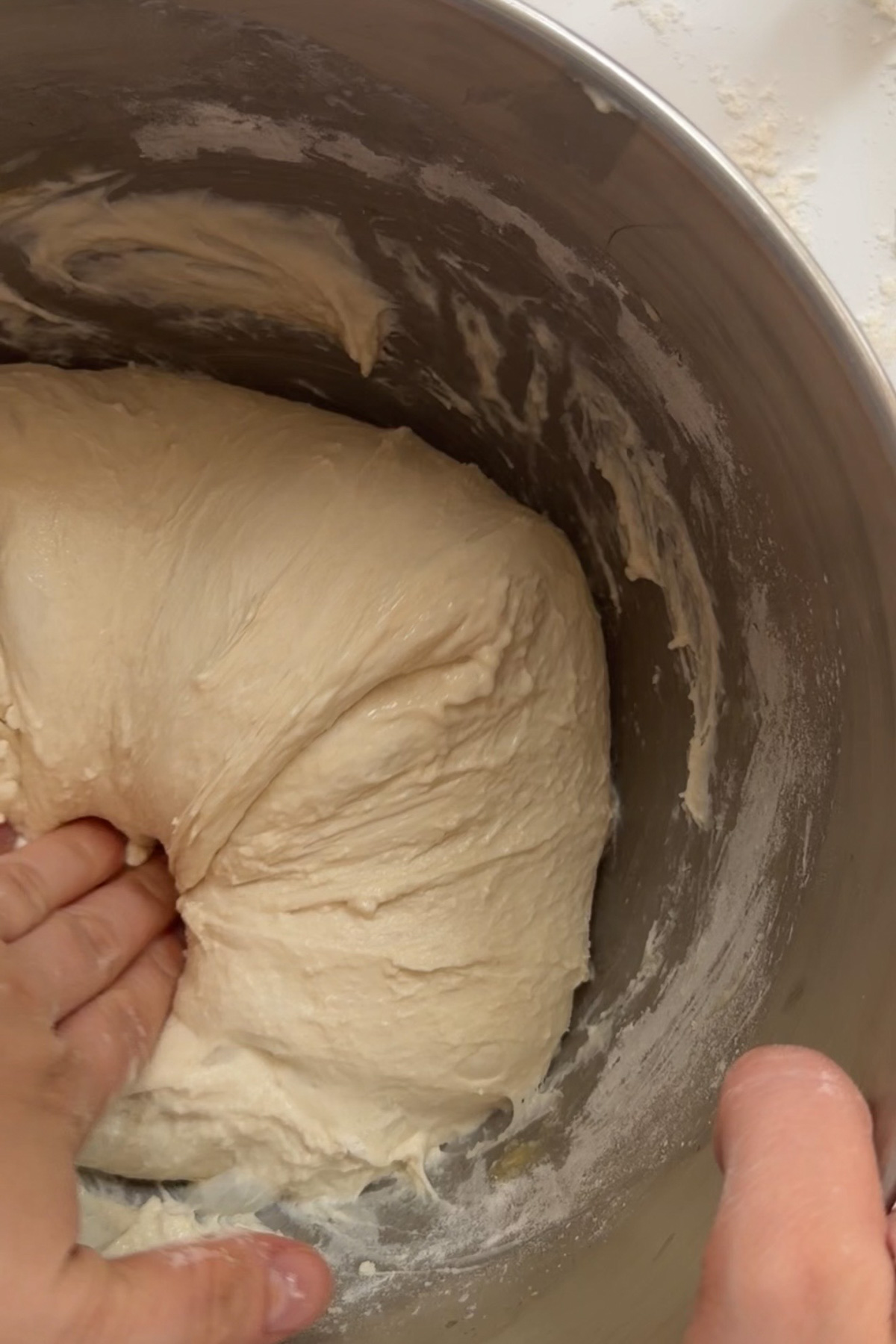
Step 2: Fold: Perform stretch and folds until smooth.
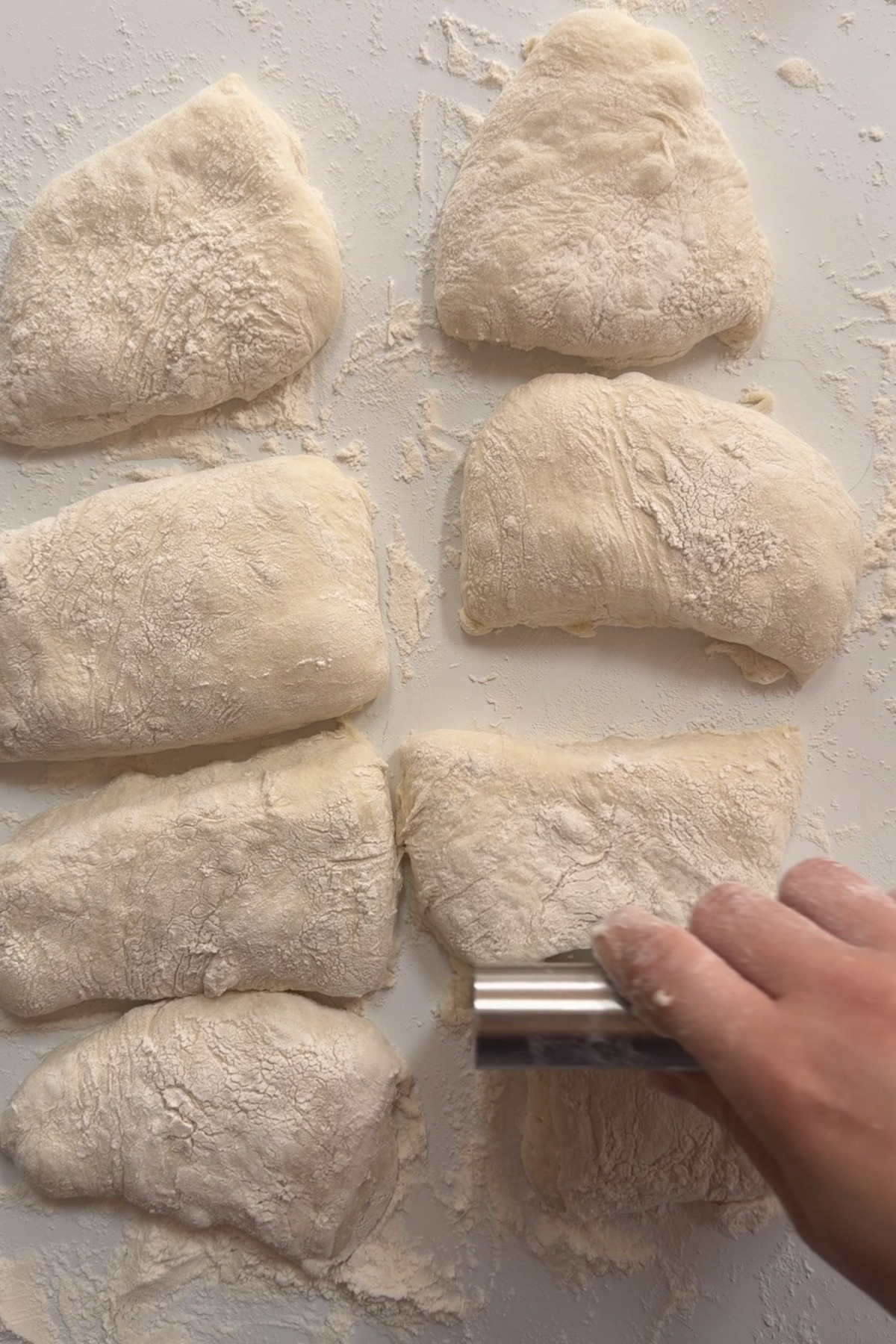
Step 3: Cut: Coat EVERYTHING with flour!!! Then gently stretch and cut into rolls.
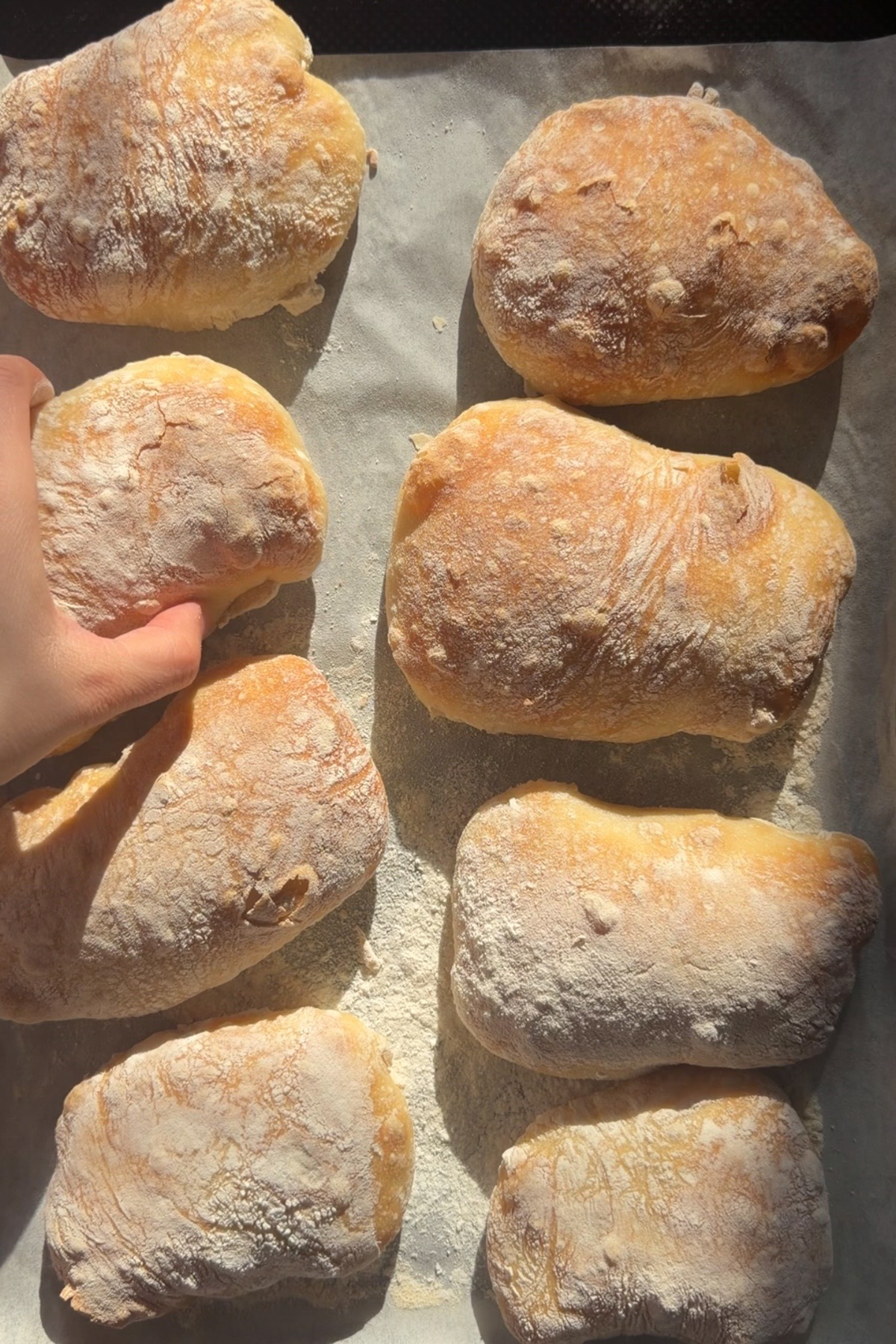
Step 4: Bake: Steam bake until golden and crisp (this can take up to 30 mins depending on the oven so just keep an eye on color!).
Weigh your ingredients! Using a kitchen scale ensures your measurements are accurate, which is key for getting consistent results in baking. It takes the guesswork out of measuring and helps your recipes turn out exactly as intended every time.
Expert Tips
Cool before slicing. I know. It's hard. But cutting into a hot ciabatta roll compresses the crumb before it's fully set. Give it at least 15–20 minutes on a wire rack.
Don't add flour to the dough. I'll say it again because it's the most common mistake: adding extra flour to compensate for the wetness will give you dense, tight rolls instead of airy ones. Keep flour on the surface and your hands only.
Wet hands for stretch and folds. Wet hands prevent the dough from sticking without incorporating extra flour. Keep a bowl of water nearby and dip your hands before each set.
Be gentle when shaping. All those air bubbles that built up during fermentation are what give you the open crumb. Rough handling deflates them. Stretch gently, cut with a bench scraper, and don't reshape once they're on the pan.
Don't skip the steam. The hot water pan at the bottom of the oven is essential for oven spring and that crackly crust. It keeps the exterior from setting too fast so the rolls can expand fully before the crust firms up.
What Makes This Recipe Special?
Most homemade rolls are enriched with butter, eggs, and milk, which gives them a soft, pillowy texture (like my braided cardamom bread). Ciabatta is the opposite: a lean dough, high hydration, and a bake that's all about crust development. That's what makes these rolls feel different from everything else on the site.
The sourdough discard is doing quiet but real work here. Unlike the enriched discard doughs in my same-day sourdough crescent rolls or fluffy sourdough discard cinnamon rolls, where the discard is one part of a rich, buttery dough, here it's adding flavor to a dough with almost nothing else going on.
That subtlety is everything — it's what makes these taste as if they came from a good bakery instead of a bread machine. I also love this in my sourdough discard pretzel bites and sourdough discard pizza!
Sourdough Discard Ciabatta Rolls FAQ
Ciabatta dough is intentionally high-hydration — that's what creates the open, airy crumb. A wet, sticky dough at the start is correct. The stretch and fold sets develop the gluten over time and the dough will become more manageable as you work through them.
Yes — and it's worth doing for the flavor payoff. Complete the stretch and fold sets, then cover the bowl and refrigerate during the bulk rise for up to 16 hours. Shape and bake after a short rest at room temperature. The slower fermentation deepens the sourdough flavor significantly.
Almost always one of two things: the dough was overhandled during shaping (deflating the air bubbles), or flour was added directly to the dough (tightening the crumb). Wet hands, a light touch, and keeping flour on the surface rather than in the dough are the three habits that fix this.
Yes — active starter works just as well here. The small amount of commercial yeast is handling the primary rise, so the activity level of your discard or starter doesn't significantly change the outcome.
No — this dough doesn't require kneading, just stretch and folds, which you do by hand. A large bowl and wet hands are all you need.
Troubleshooting Guide
| Problem | Cause | Fix |
|---|---|---|
| Dense, tight crumb | Extra flour added to dough | Keep flour on surface only — never in the dough |
| No oven spring | Skipped steam step | Always use a hot water pan on the bottom rack |
| Rolls deflated when shaped | Overhandled the dough | Stretch gently, cut with bench scraper, don't reshape |
| Dough won't come together | Undermixed | Mix until no dry flour remains; dough will be very wet |
| Gummy crumb | Cut too soon | Cool at least 15–20 minutes before slicing |
Storage
- Store leftover rolls in an airtight container at room temperature for up to 2 days. The crust will soften overnight — a quick 5-minute stint in a 375°F oven brings it right back.
- Freeze cooled rolls individually wrapped in plastic wrap, then placed in a zip-top freezer bag, for up to 3 months. Reheat directly from frozen in a 375°F oven for 10–12 minutes to restore the crust.
Other Sourdough Discard Recipes to Consider




Did you make this recipe?
If you try this recipe, I’d love if you left a quick rating and review below! It really helps support my blog and lets others know how the recipe turned out for you. Also, don't forget to tag me @kneadedthat on Instagram and use the hashtag #kneadedthat so I can see what you made and share it!
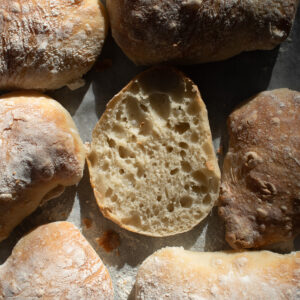
Sourdough Discard Ciabatta rolls
Equipment
- Large mixing bowl (or stand mixer with dough hook attachment)
- Bench scraper
- Parchment Paper
- Baking sheet
- Metal baking pan (for steam)
Ingredients
- 500 g bread flour
- 120 g sourdough discard
- 400 g warm water
- 10 g fine sea salt 1 ¾ teaspoons
- 5 g instant yeast or active dry yeast proofed (1 ½ teaspoons)
- 15 g olive oil 1 tablespoon
Instructions
- Mix the dough: In a large bowl, combine the flour, salt, and yeast. Add the warm water, sourdough discard, and olive oil, then mix until a shaggy, very wet dough forms.
- Rest: Cover and let the dough rest for 30 minutes.
- Stretch and fold: With wet hands, perform a set of stretch and folds. Cover and rest for 30 minutes, then repeat 2–3 more times until the dough becomes smoother and more elastic.
- Bulk rise: Cover and let the dough rise at room temperature for 1–2 hours, until puffy and jiggly.
- Shape: Turn the dough out onto a heavily floured surface. Then dust both your hands AND the dough with flour. Gently stretch it into a rectangle without deflating, then use a bench scraper to cut it into 8 rolls.
- Final rest: Transfer to a parchment-lined baking sheet and let rest for 30–45 minutes while the oven preheats.
- Bake: Preheat oven to 450°F with a metal pan on the bottom rack. When ready to bake, carefully pour 1 cup of hot water into the pan to create steam, then bake the rolls for 20-25 minutes or until golden brown.
- Cool: Let the rolls cool before slicing to allow the crumb to set.

Rhonda Leep says
We were amazed at how great the ciabatta rolls turned out. Been baking with sourdough and discard most of the year, and this is the best bread/roll recipe I have used. The recipe itself and the formatting of the recipe being clear and easy to follow.
I will be trying more of your recipes.
Loved it🥰
Rhonda
Audrey Grubb says
Rhonda, you made my day! Thank you so much for this kind review and for taking the time to try my recipes! I'm glad you loved it 🙂
Steve Voss says
Excellent recipe!
Audrey Grubb says
Thank you so much!
Steve Voss says
This ciabatta recipe is excellent! I made them for the first time last week and I'm making them again today. Love the texture and flavor.
Shamaila says
Turned out perfect !! Thanks for the recipe !!🙃
Audrey Grubb says
That's great to hear! Thank you for trying my recipe 🙂
Audrey Grubb says
This one's a staple in my kitchen. If you give it a go, leave a star rating below! It really helps other bakers find the recipe!
Kimberly A. Arellanes says
Is it possible to make this recipe without yeast?
Audrey Grubb says
Of course! You can make these without commercial yeast, but you’ll want to use active, bubbly sourdough starter rather than unfed discard. Use the same 120 g of starter and leave out the instant yeast. Follow the recipe as written, but expect the fermentation times to be much longer. After the stretch-and-folds, let the dough bulk ferment until it’s noticeably puffy, bubbly, and has risen about 50–75%. This may take 4–8 hours depending on the temperature of your kitchen and the strength of your starter. After shaping, let the rolls rest until puffy before baking, usually another 1–2 hours. Go by how the dough looks and feels rather than the clock. I've done this for some of my other discard recipes, but not this one yet. It should work out just fine, but please let me know how it goes!