
My sourdough discard pie crust is an easy, practical way to use up extra discard while getting a crust that's tender, flavorful, and incredibly simple to work with.
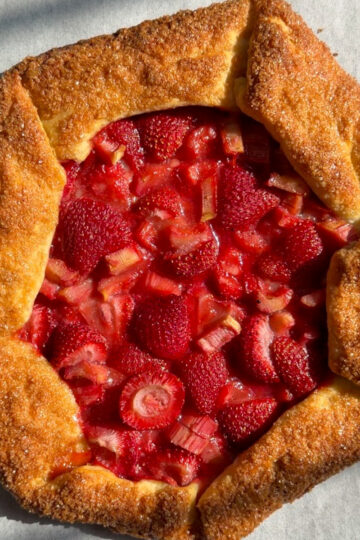
Whether you're making a sweet pie like my strawberry rhubarb galette, a savory quiche, or a sourdough chicken pot pie, this crust holds its shape and bakes up golden every time. If you love simple sourdough discard recipes, you'll also love my sourdough discard ciabatta rolls!
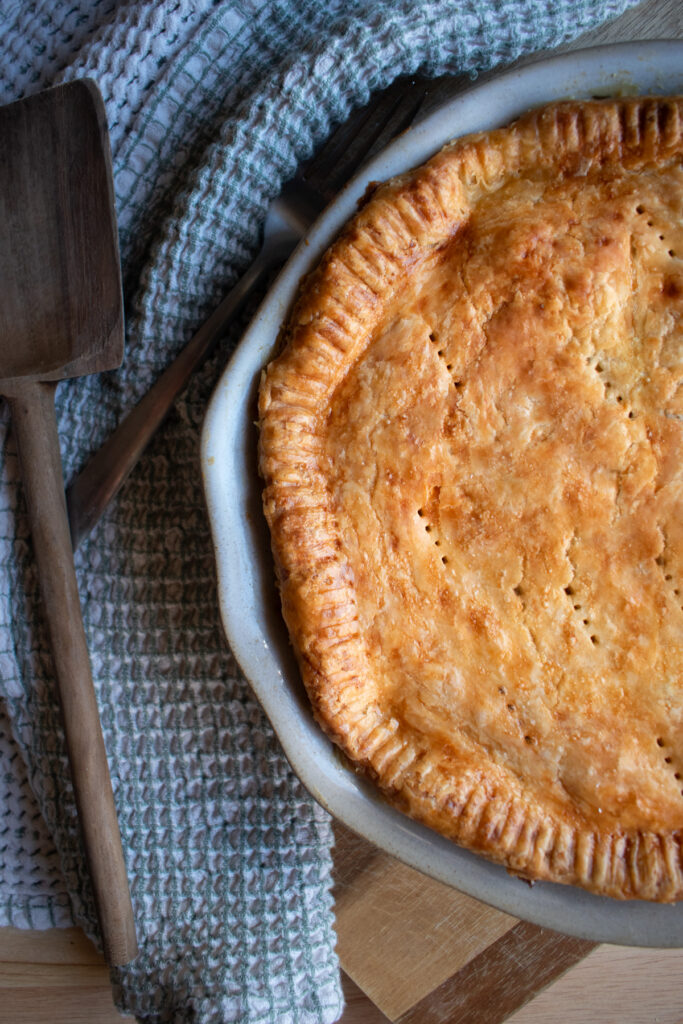
Quick Look: Sourdough Discard Pie Crust
⏱️ Ready In: About 40 minutes (plus chilling)
🔥 Bake Time: 20–25 minutes blind-baked, or ~45 minutes with filling (375°F)
🍽️ Makes: 1 single 9-inch crust (double for a two-crust pie)
✨ Calories: Approximately 1,507 for the whole crust
🥄 Main Ingredients: Flour, cold butter, sourdough discard, vinegar
🌿 Dietary Info: Vegetarian (easily made dairy-free)
💛 Why You'll Love It: A tender, flaky, tangy discard pie crust for sweet or savory pies.
SUMMARIZE & SAVE THIS CONTENT ON
Why You'll Love This Recipe
- A great way to use discard: A perfect home for that jar of starter in your fridge, just like my sourdough discard ciabatta rolls.
- Tender, flaky, and tangy: Cold butter and discard create pockets of flakiness with a subtle sourdough depth.
- Sweet or savory: Adjust the sugar and add-ins for anything from a strawberry rhubarb galette to a savory sourdough chicken pot pie.
- Quick and reliable: Comes together in minutes and rolls out beautifully — great for beginners.
- Year-round staple: Apple and pumpkin pies in fall, berry pies in summer, quiches in spring — this crust does it all, right alongside my fruity easy apple pie crumb bars.
Jump to:
- Quick Look: Sourdough Discard Pie Crust
- Why You'll Love This Recipe
- Ingredients You'll Need
- Easy Substitutions & Variations
- How to Make Sourdough Pie Crust
- Expert Tips
- What Makes This Recipe Special?
- Sourdough Pie Crust FAQs
- Sourdough Pie Crust Troubleshooting Guide
- Storage
- Other Sourdough Recipes to Consider
- Homemade Sourdough Pie Crust
Ingredients You'll Need
- all-purpose flour: The structure of the crust.
- cold unsalted butter, cubed: The key to flakiness — kept cold so it stays in specks that melt into flaky layers.
- cold sourdough discard: Straight from the fridge; adds tang, tenderness, and uses up your starter.
- cold egg, separated: The yolk goes in the dough; save the white to brush on before baking for a golden finish.
- apple cider vinegar (or white vinegar): Keeps the crust tender and helps prevent a bready texture.
- salt + sugar: Season to taste — a little more sugar for sweet pies, a pinch for savory.
See the recipe card for quantities.
Easy Substitutions & Variations
- Sweet pies: Add 2–3 teaspoons of sugar for a slightly sweeter base for fruit or custard fillings.
- Savory pies: Reduce the sugar to a pinch and add cracked pepper, herbs, or garlic powder.
- Extra-flaky crust: Replace 1 tablespoon of flour with 1 tablespoon of cornstarch for a bakery-style tender texture.
- Extra-tangy crust: Increase the discard to ⅔ cup and reduce the butter slightly for a more pronounced sourdough flavor.
- Herb crust: Mix in 1–2 teaspoons dried thyme, rosemary, or Italian seasoning for quiches or pot pies.
- Spiced sweet crust: Add a pinch of cinnamon or nutmeg for apple or pumpkin pie.
- Flour swap: Use half whole-wheat flour for a heartier crust (add a teaspoon of water if it feels dry).
- Dairy-free: Use a plant-based butter and freeze the dough a bit ahead to keep it cold.
How to Make Sourdough Pie Crust
Note: I bake by weight for accuracy. Cup measurements are approximate and may vary depending on how you scoop.
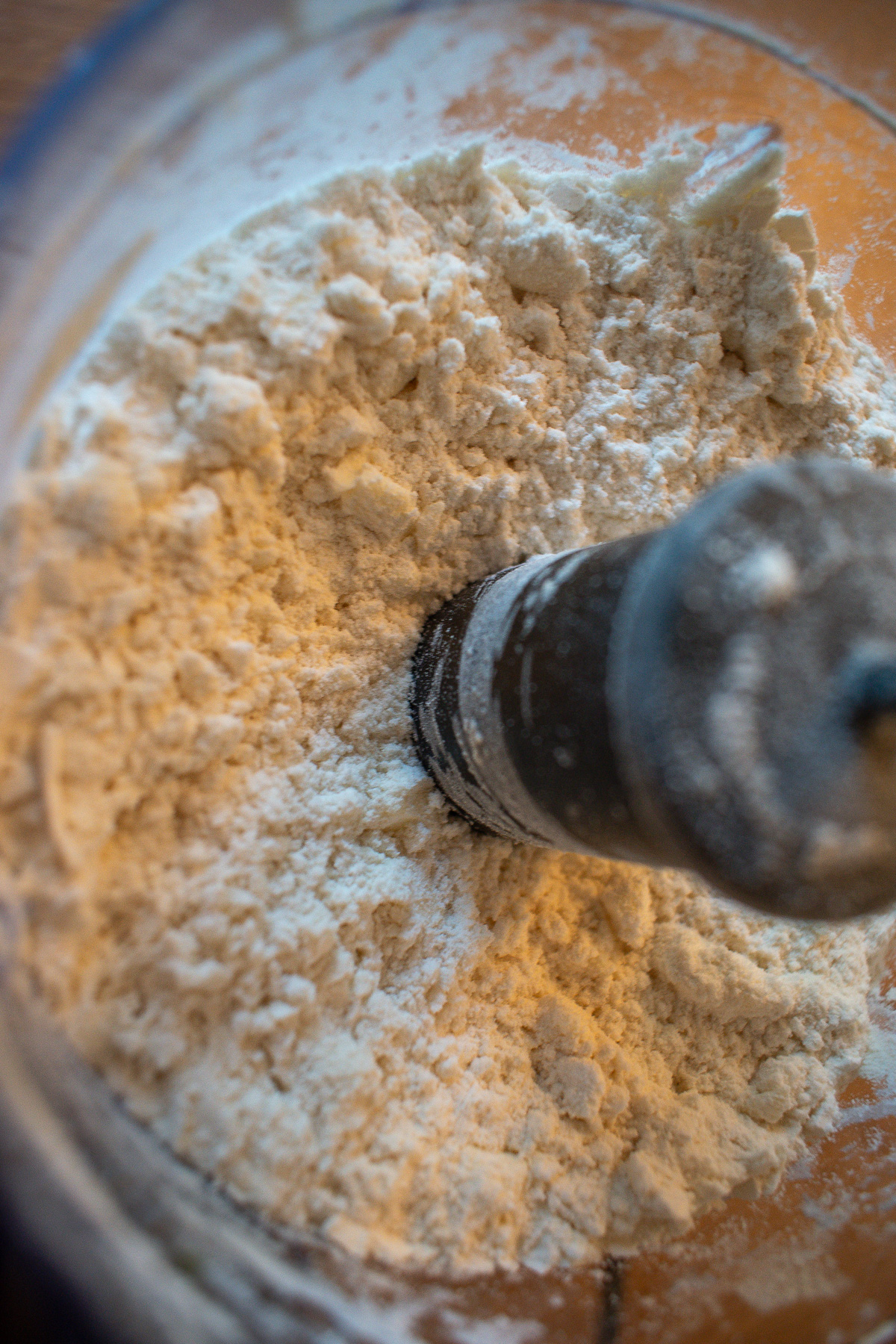
Step 1: Cut in the butter: In a food processor (or bowl), pulse the flour and cold cubed butter until they form pea-sized pieces. If working by hand, cut the butter in with a pastry blender or a fork and knife.
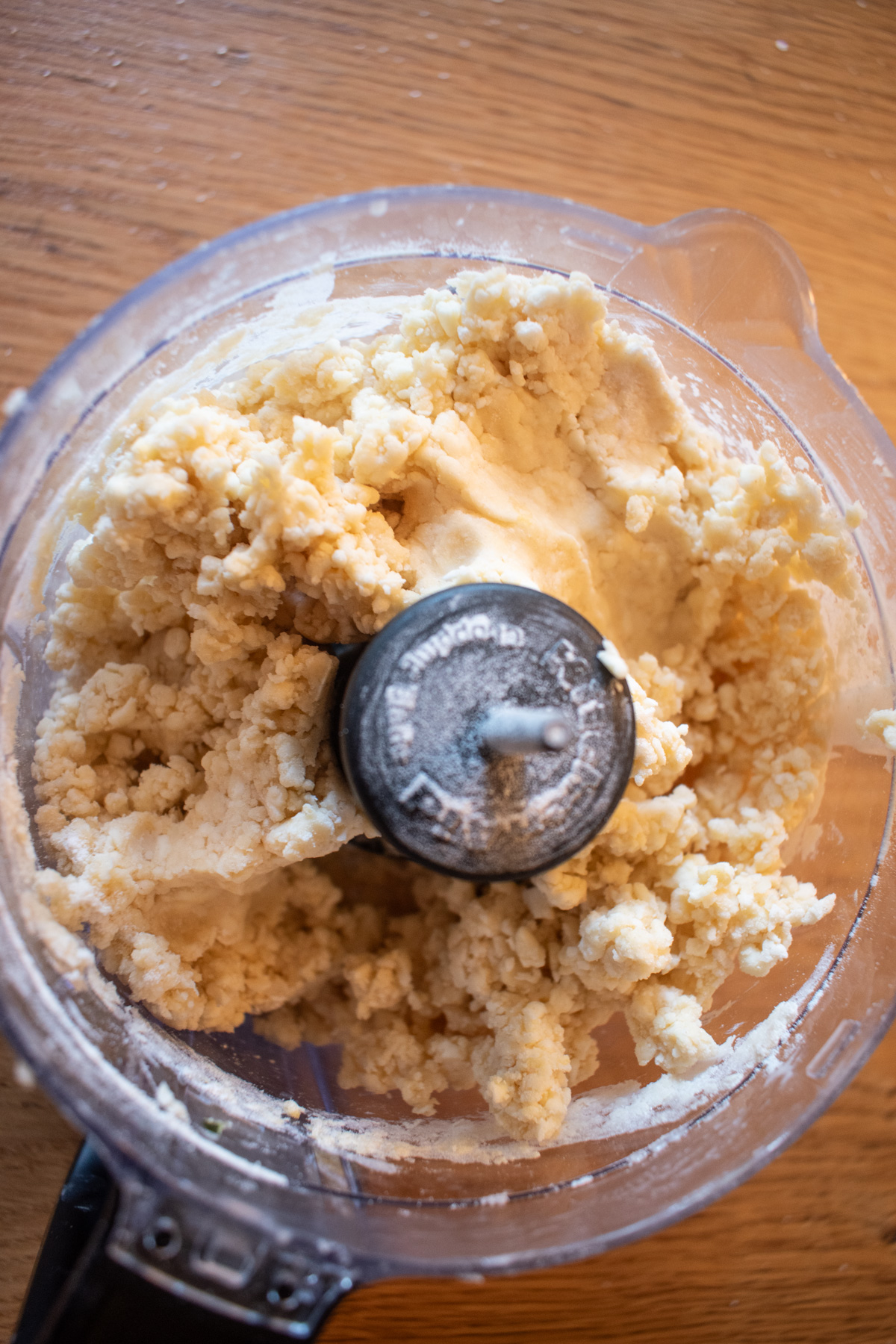
Step 2: Add the wet ingredients: Add the cold sourdough discard, cold egg yolk (save the white for brushing), salt, sugar, and vinegar. Pulse until just combined — you should still see butter and egg specks throughout. If you think it's not mixed enough, it probably is!
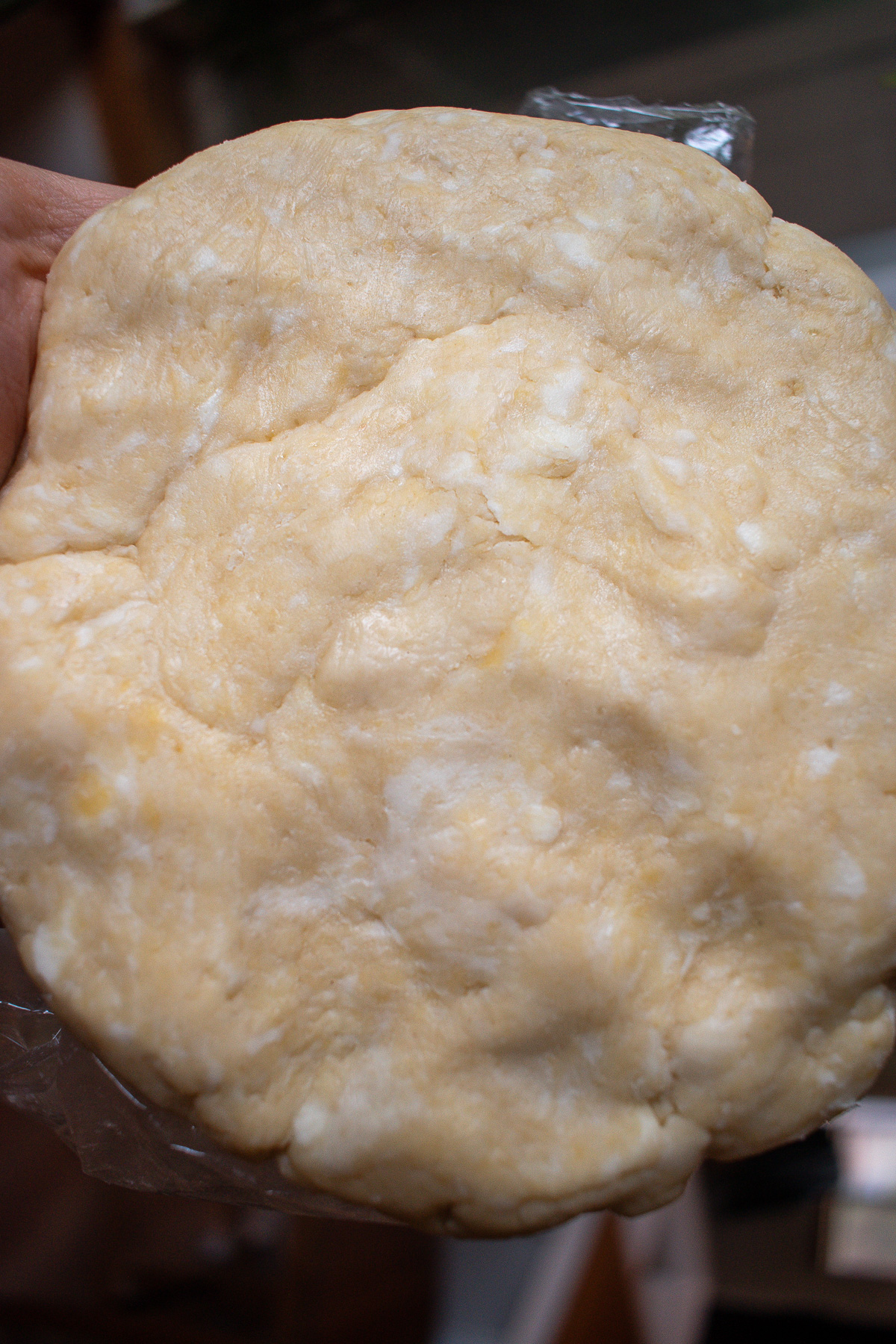
Step 3: Chill: Turn the crumbly dough onto a floured surface and gently press into a round disk (don't expect a smooth ball). Wrap in cling wrap and refrigerate at least 15 minutes so it firms up before rolling.
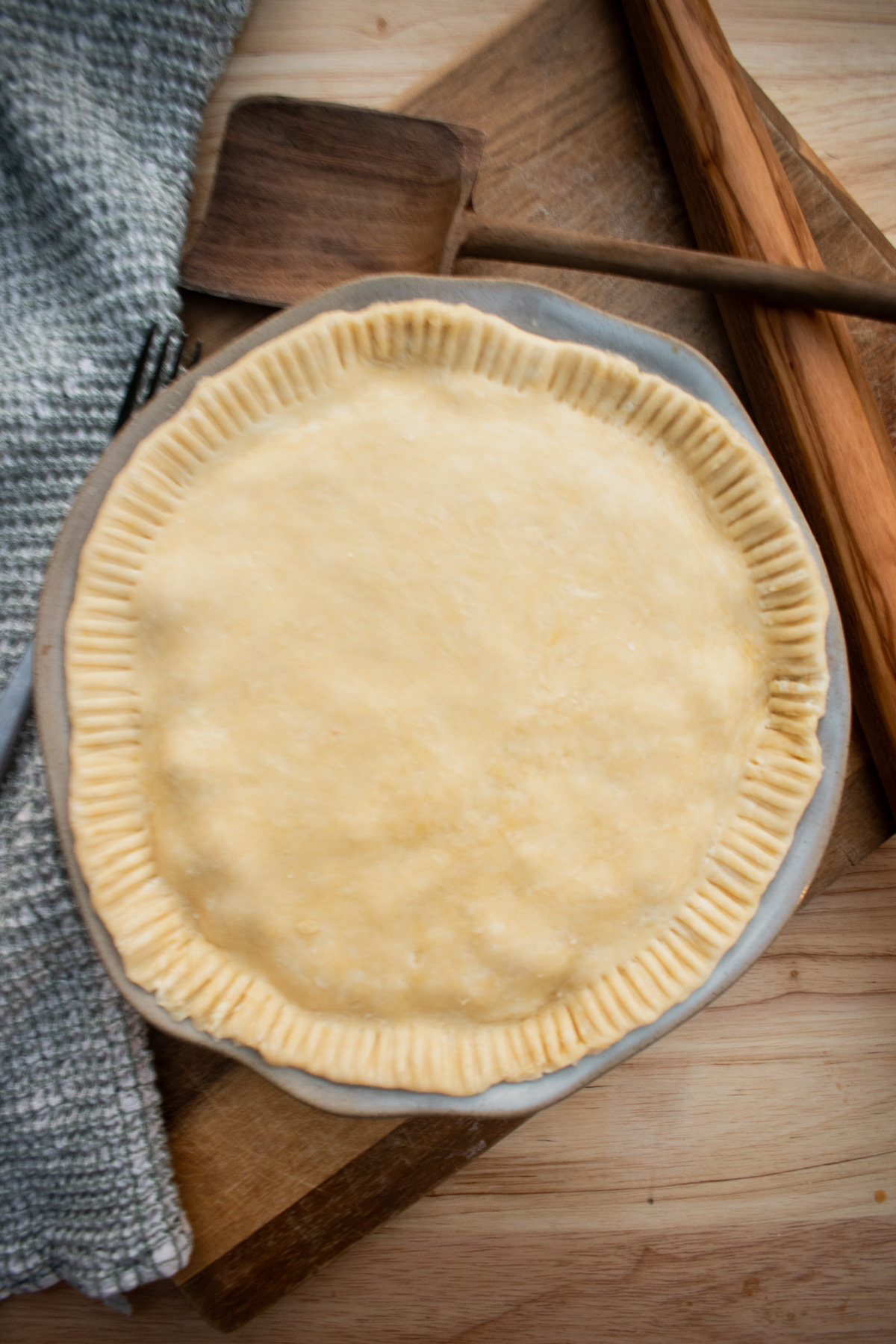
Step 4: Roll and prep: On a lightly floured surface, roll the dough to about ⅛-inch thick, until it covers your pan with a little overhang. Poke holes with a fork and lightly brush with the reserved egg white.
Step 5: Bake: Style the edges and bake according to your recipe. Over filling, that's usually about 45 minutes at 375°F; blind-baked, about 20–25 minutes at the same temperature. Watch the edges and shield them with foil if they brown too fast.
Weigh your ingredients! Using a kitchen scale ensures your measurements are accurate, which is key for getting consistent results in baking. It takes the guesswork out of measuring and helps your recipes turn out exactly as intended every time.
Expert Tips
- Keep everything cold. Cold butter, discard, and egg are essential — warm ingredients melt the butter, over-mix the dough, and lose the flakiness.
- Don't overmix. Barely-incorporated dough with visible butter specks is what you want; those specks melt into flaky layers as it bakes.
- Use a food processor. It makes cutting in the butter fast and keeps everything cold — but a pastry blender works too.
- Chill before rolling. At least 15 minutes in the fridge firms the dough so it rolls out cleanly.
- Shield the edges. If the crust edges brown too quickly, cover them with a ring of foil or a pie crust shield.
What Makes This Recipe Special?
The sourdough discard is the secret here — it adds a subtle tang and extra tenderness you just can't get from a standard crust, plus it uses up that jar in your fridge. A splash of vinegar keeps the texture flaky rather than bready, which is what makes this crust so reliable for both sweet and savory bakes. It's the same "discard makes it better" philosophy behind my sourdough discard pizza and sourdough discard garlic knots.
It's also endlessly versatile. Sweeten it for a berry pie like my jammy blueberry crumb bars or strawberry rhubarb crumb bars, brighten it for a lemon tart, or keep it savory for a quiche or pot pie — the same dependable crust every time, and a natural partner to a warm slice of sourdough cornbread or sourdough cornbread muffins on a cozy table.
Sourdough Pie Crust FAQs
Absolutely! Add an extra ¼ cup of flour and add ice water a tablespoon at a time until the dough forms.
Sourdough is a natural leaven that can make a crust slightly bready. The vinegar helps limit gluten formation for an ideally tender, flaky texture.
Yes! Wrap tightly and refrigerate for 1–2 days, or freeze for 4–6 months (use cling wrap and a freezer bag). Freezing is best, since chilling too long in the fridge can let the sourdough "proof" and turn the crust a bit bready.
Cold ingredients keep the butter in distinct specks that melt in the oven to create flaky pockets. Warm ingredients melt the butter, over-mix the dough, and give you a less flaky crust.
No — this makes one single crust. Double the recipe for a two-crust pie (like a fruit pie with a top and bottom).
Yes! Active starter works here just as well as unfed discard.
Sourdough Pie Crust Troubleshooting Guide
| Problem | Cause | Fix |
|---|---|---|
| Tough, not flaky | Ingredients too warm or dough overmixed. | Keep everything cold and stop mixing while butter specks remain. |
| Dough too crumbly to roll | Discard was very thick or dough too dry. | Add a splash of cold water until it just holds together. |
| Bready, chewy texture | Sourdough over-proofed in the fridge. | Freeze or make it the day of; the vinegar helps too. |
| Edges browning too fast | Uncovered crust edges. | Shield with foil or a pie crust shield partway through. |
| Shrinking in the pan | Dough stretched or not chilled. | Chill before baking and ease the dough into the pan without stretching. |
Storage
- Refrigerate the wrapped dough for 1–2 days, or freeze for 4–6 months (cling wrap plus a freezer bag).
- Freezing is best for keeping that flaky texture — chilling too long in the fridge can make the crust slightly bready.
Other Sourdough Recipes to Consider
Did you make this recipe?
If you try this recipe, I’d love if you left a quick rating and review below! It really helps support my blog and lets others know how the recipe turned out for you. Also, don't forget to tag me @kneadedthat on Instagram and use the hashtag #kneadedthat so I can see what you made and share it!
Homemade Sourdough Pie Crust
Equipment
- Food processor (HIGHLY recommend! It will make cutting in the butter so much easier.)
- This food processor is the perfect size for this recipe!
- Pastry knife (if not using a food processor)
- Pastry mat (optional)
- Rolling Pin
Ingredients
- 120 grams all-purpose flour 1 cup
- 113 grams cold unsalted butter cubed (½ cup)
- 120 grams cold sourdough discard ½ cup; use it straight from the fridge
- 1 egg cold and separated
- 1 teaspoon apple cider vinegar or white vinegar
- ½ teaspoon salt
- ½ –1 teaspoon sugar (more
Instructions
- In a food processor (or mixing bowl), add the flour and cubed cold butter. Pulse until the butter and flour form pea-sized pieces. If not using a food processor, cut the cold butter into the flour with a fork and knife or a pastry blender.120 grams all-purpose flour, 113 grams cold unsalted butter
- Add the cold sourdough discard, cold egg yolk (save the white to brush the crust before baking), salt, sugar, and vinegar.120 grams cold sourdough discard, 1 egg, 1 teaspoon apple cider vinegar, ½ teaspoon salt, ½ –1 teaspoon sugar (more
- Pulse until just combined — you'll see butter and egg specks throughout, and that's good. We don't want a fully incorporated dough here; those butter pockets melt in the oven for a super flaky crust. If you think it isn't mixed enough, it probably is!
- Turn the dough onto a floured surface (or floured pastry mat). It will be crumbly — don't expect a solid ball. Gently flatten into a round disk, wrap in cling wrap, and refrigerate at least 15 minutes so it firms up for rolling.
- When ready, place the dough on a lightly floured surface, sprinkle a little flour on top, and roll out with a floured rolling pin to about ⅛-inch thick, until it covers your pan with a bit of overhang. Poke holes with a fork and lightly brush with the reserved egg white.
- Style the edges to taste and bake according to your recipe. Over filling, this typically takes about 45 minutes at 375°F. Blind-baked, it usually takes about 20–25 minutes at the same temperature — keep an eye on it.

Allison H says
This is the best pie crust ever!! I use this recipe ALL the time for galettes, pigs in a blanket, pop tarts.. it is so flaky & perfect every time & such a staple for using discard.
Audrey says
This means the world to me! Thank you for taking the time to leave a comment 🙂
Kellie Joiner says
Can I use active starter for this recipe?
Audrey says
Yes!
Dorothy Fink says
This is absolutely the flakiest best pie crust I have ever made.and Is now my go to.Thankyou!!
Audrey says
Wow, Dorothy! Thank you for the compliment, I am thrilled to hear you enjoyed the recipe! 🙂
Elizabeth says
It’s doesn’t say, but the picture shows the crust being on the top AND bottom of the pie. Does this recipe make enough for that or would this have to be doubled to create a top layer for say, a chicken pot pie
Audrey says
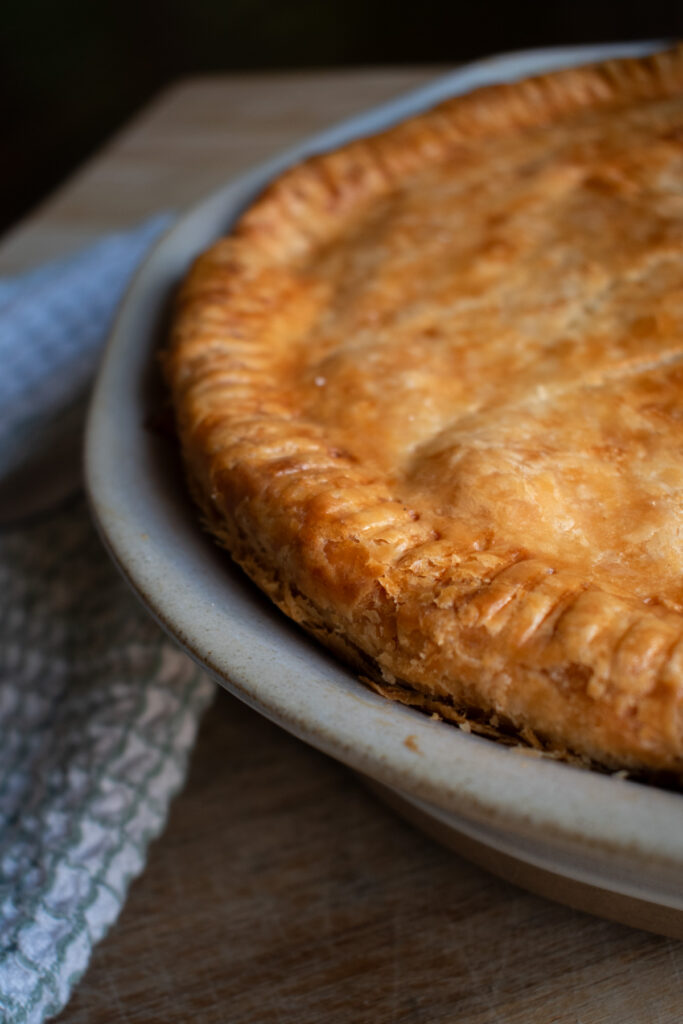
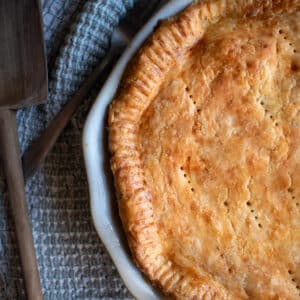
Hi there! This makes one crust and will need to be doubled in order to make a two crust pie. The picture shown is of my sourdough chicken pot pie which only uses one crust on the top. I hope it turned out well for you!
Marsha Smith says
I'm no chemist, but I have read where 1/2 tsp of cream of tartar helps make a flaky crust. I'm loving your recipe!
Audrey says
Ohh! I'll have to try this. The flakier the better! Glad you enjoyed it 🙂