
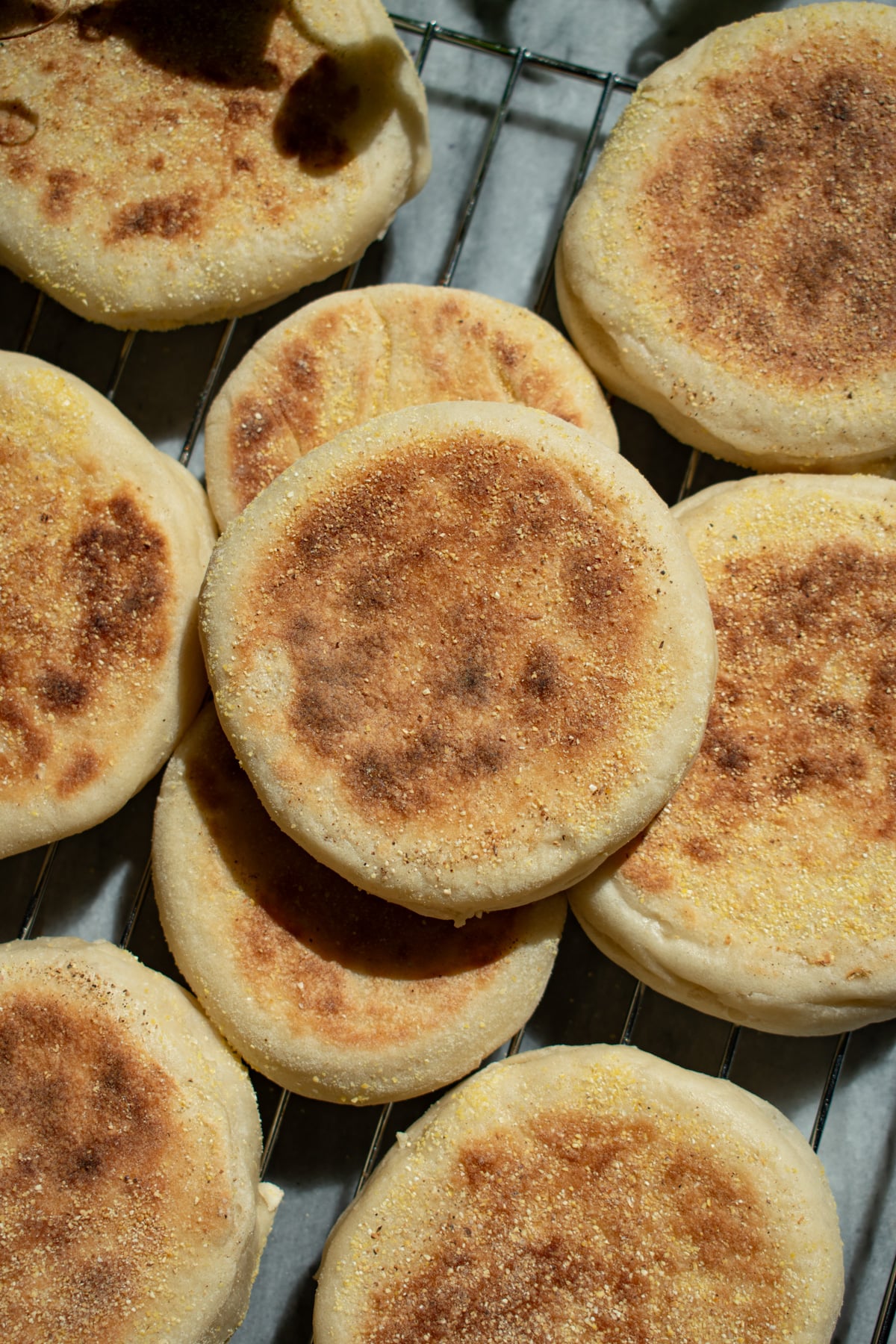
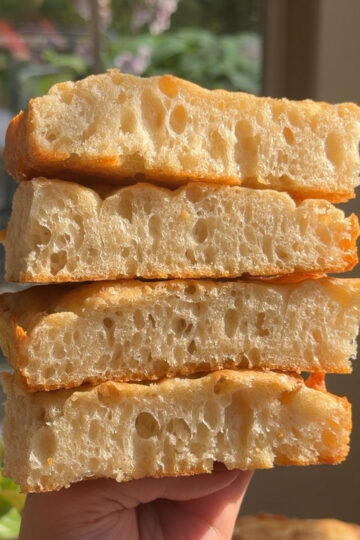
These Sourdough Discard English Muffins are soft and chewy with crisp, golden exteriors and plenty of nooks and crannies inside.
Since they lean on both sourdough discard and instant yeast, you get real sourdough flavor without waiting all day for a starter to do the work, the same shortcut I use in my sourdough discard bagels.
Quick Look: Sourdough Discard English Muffins
Yield: 10 English muffins
Prep Time: 25 minutes
Rise Time: 1½-2 hours
Cook Time: 20-25 minutes
Total Time: About 2½-3 hours
Calories: 178 per muffin (estimated)
Main Ingredients: Sourdough discard, instant yeast, milk, butter
SUMMARIZE & SAVE THIS CONTENT ON
Why you'll love this recipe
- Perfect texture. A soft, tacky dough is what gives these their signature open, craggy interior- the same texture goal behind my sourdough discard ciabatta rolls.
- No all-day fermentation. Instant yeast does the heavy lifting for rise time, while the discard still brings real sourdough flavor into the dough.
- Cooked on the stovetop. A dry skillet or griddle does all the work; no oven required until the very end, if at all.
- Freezer-friendly. These freeze beautifully, so one batch can stock your freezer with quick breakfasts for weeks.
- Optional overnight method. The dough can be made ahead and retarded in the fridge overnight for even deeper sourdough flavor.
Jump to:
- Quick Look: Sourdough Discard English Muffins
- Why you'll love this recipe
- Ingredients You'll Need
- Easy Substitutions & Variations
- How to Make Sourdough Discard English Muffins
- Expert Tips
- What Makes This Recipe Special?
- Sourdough Discard English Muffins FAQs
- English Muffins Troubleshooting Guide
- Storage
- Other Breakfast Recipes to Consider
- Sourdough Discard English Muffins
Ingredients You'll Need
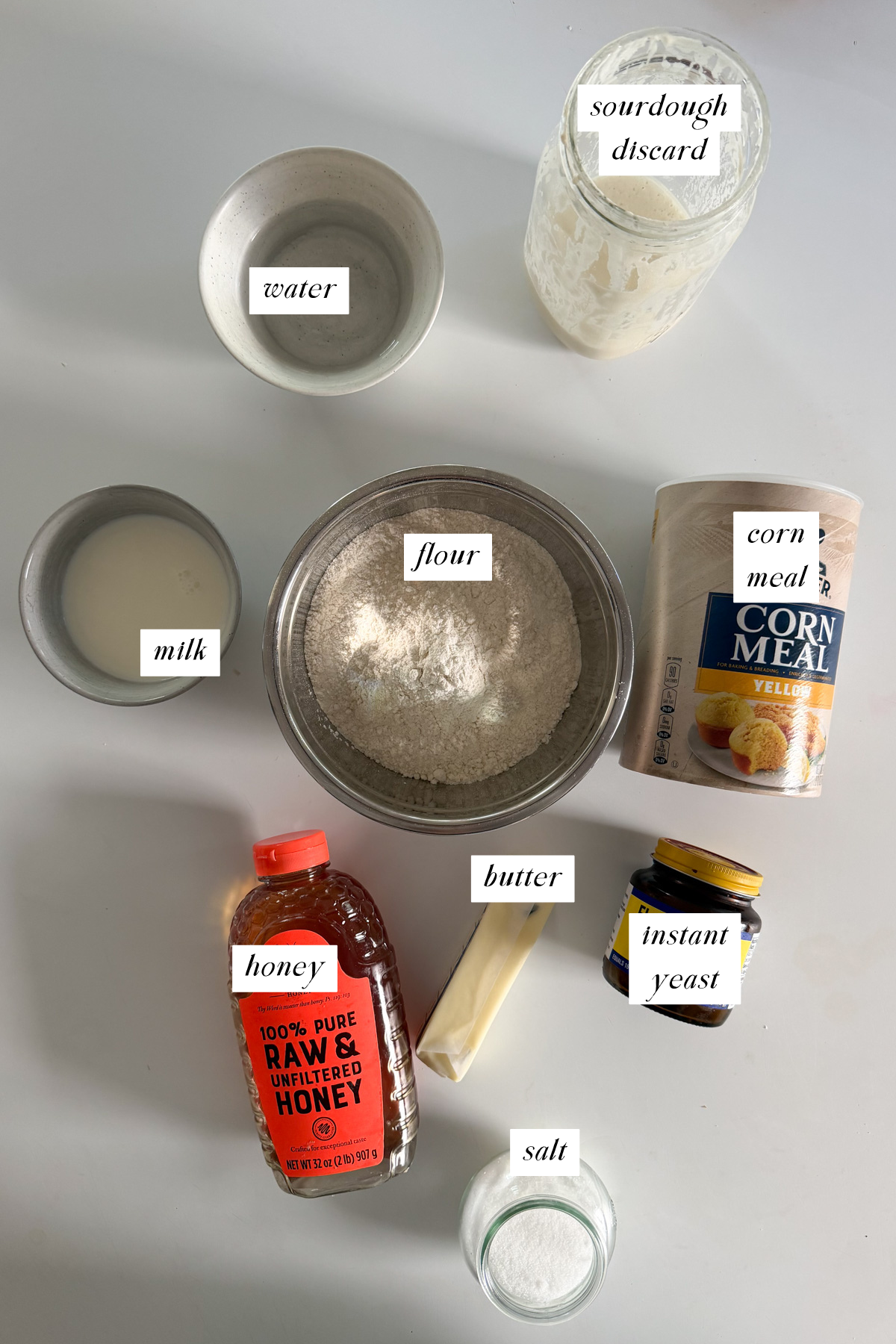
- Whole milk and warm water: hydrate the dough and help activate the yeast.
- Sourdough discard, 100% hydration: brings tang and sourdough flavor without needing an active, fed starter.
- Honey: a touch of sweetness that also feeds the yeast.
- Instant yeast: gives the dough a reliable, timely rise without an overnight ferment.
- All-purpose flour and fine sea salt: the structure and seasoning of the dough.
- Softened unsalted butter: kneaded in for a soft, tender crumb, similar to the enriched dough I use in my same-day sourdough dinner rolls.
- Cornmeal or semolina flour: dusted under and over the shaped muffins for grip and that classic English muffin bottom.
See recipe card for quantities.
Easy Substitutions & Variations
- No instant yeast? Active dry yeast works too; just dissolve it in the warm milk and water first and let it sit for 5 minutes before continuing.
- Whole wheat swap: substituting up to a third of the flour with whole wheat flour works well for a heartier muffin.
- Herbed version: knead in a tablespoon of chopped fresh herbs along with the butter for a savory twist, similar to how I flavor my sourdough discard garlic butter dinner rolls.
- Sweeter finish: brush the warm, cooked muffins lightly with melted butter and a drizzle of honey.
How to Make Sourdough Discard English Muffins
Note: I bake by weight for accuracy. Cup measurements are approximate and may vary depending on how you scoop.
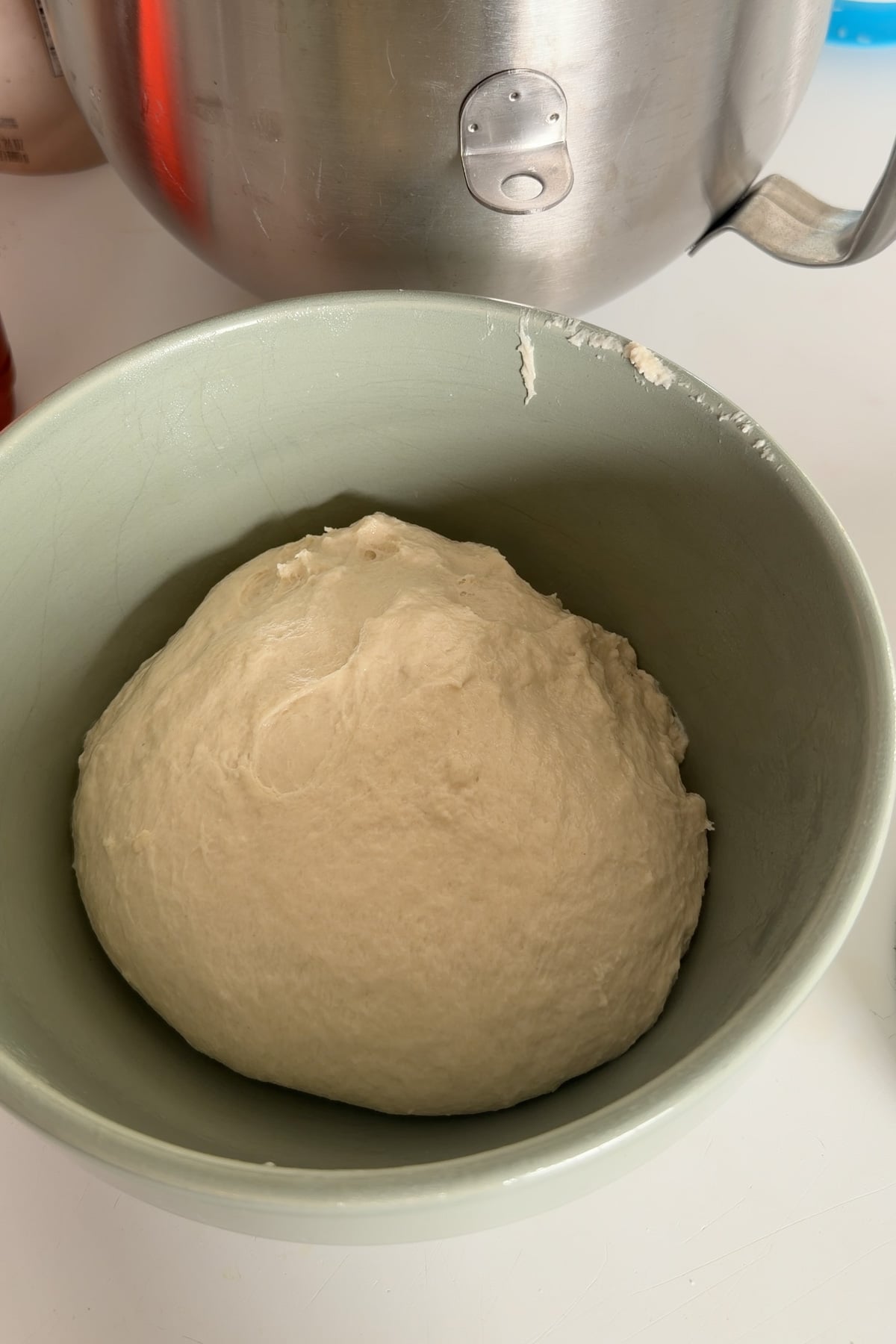
Step 1: Mix and knead the dough. Combine the warm milk, warm water, sourdough discard, honey, and yeast in a stand mixer bowl and whisk to mostly combine. Add the flour and salt and mix on low with the dough hook until shaggy, then add the softened butter and knead on medium-low for 6 to 8 minutes, until smooth, elastic, and noticeably soft and tacky.
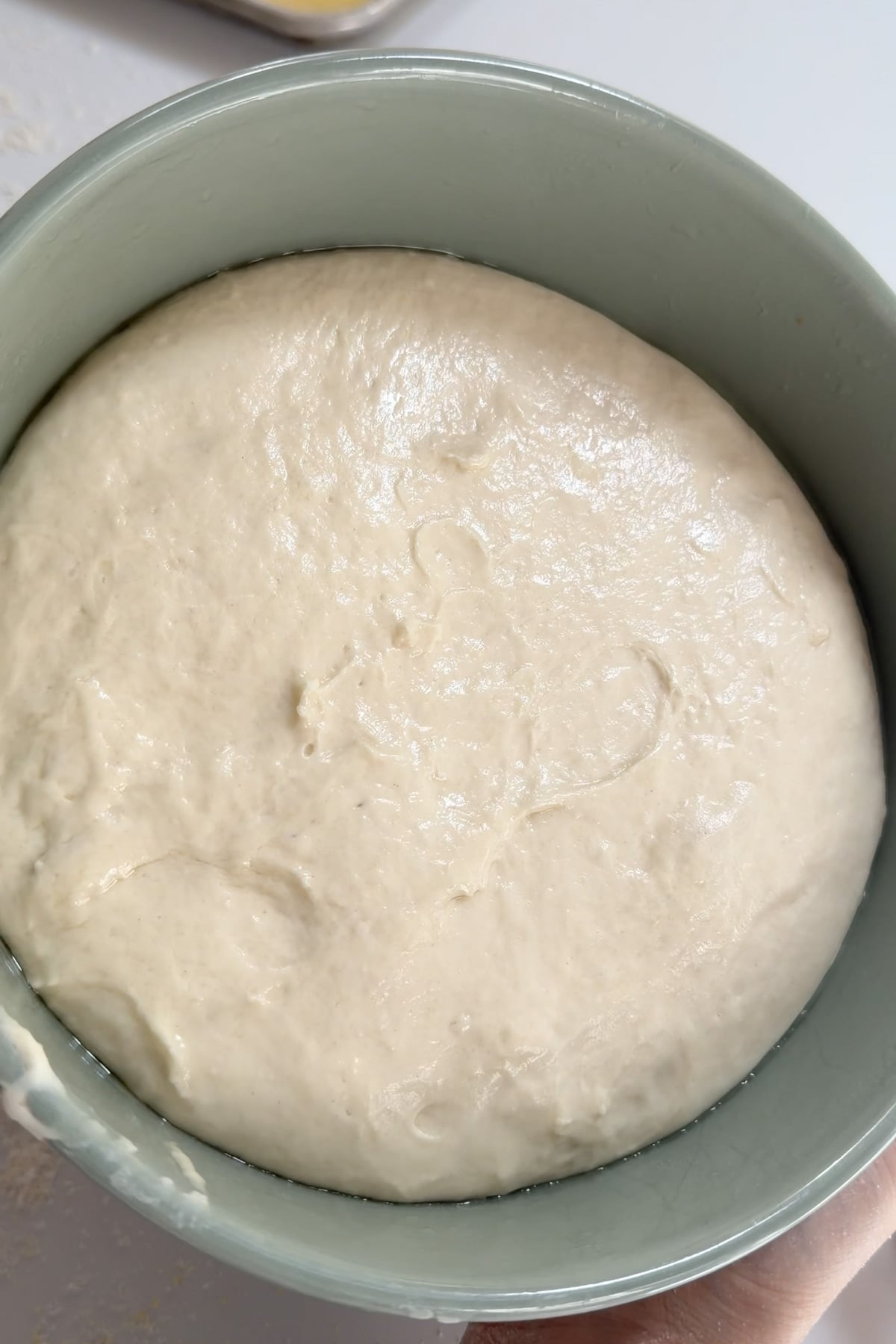
Step 2: First rise. Transfer the dough to a lightly greased bowl, cover, and let it rise in a warm spot for 60 to 90 minutes, until puffy and about doubled.
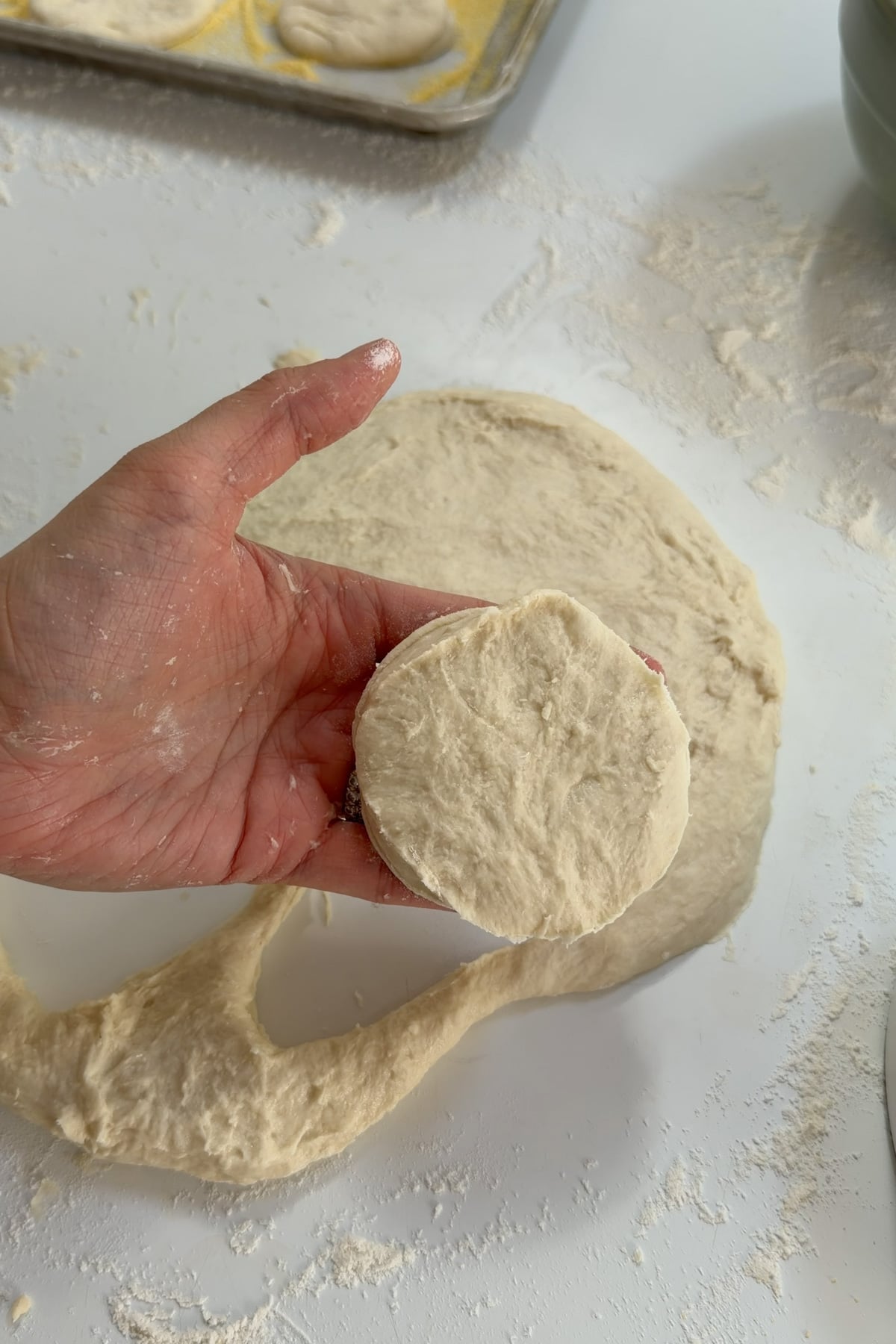
Step 3: Shape the muffins. Line a sheet pan with parchment and dust generously with cornmeal or semolina. You can shape these two ways: press the dough into a rough rectangle about ½ to ¾ inch thick and cut out rounds with a 3-inch cutter, gently rerolling the scraps once to get all 10, or simply divide the dough into 10 pieces and roll each into a ball with your hands, using the same light touch I use when shaping my sourdough discard hotdog buns.
The cutter method gives you that classic, store-bought round shape, but this dough is soft and sticky enough that it can cling to the counter even when floured; a bench knife helps you scoop the cut rounds up cleanly without losing their shape. Rolling the dough into balls and pressing them into the cornmeal is the easier route with very similar results, just a slightly rounder, less uniform shape.
Step 4: Second rise. Dust the tops with more cornmeal or semolina, cover loosely, and let rise for 30 to 45 minutes, until noticeably puffy.
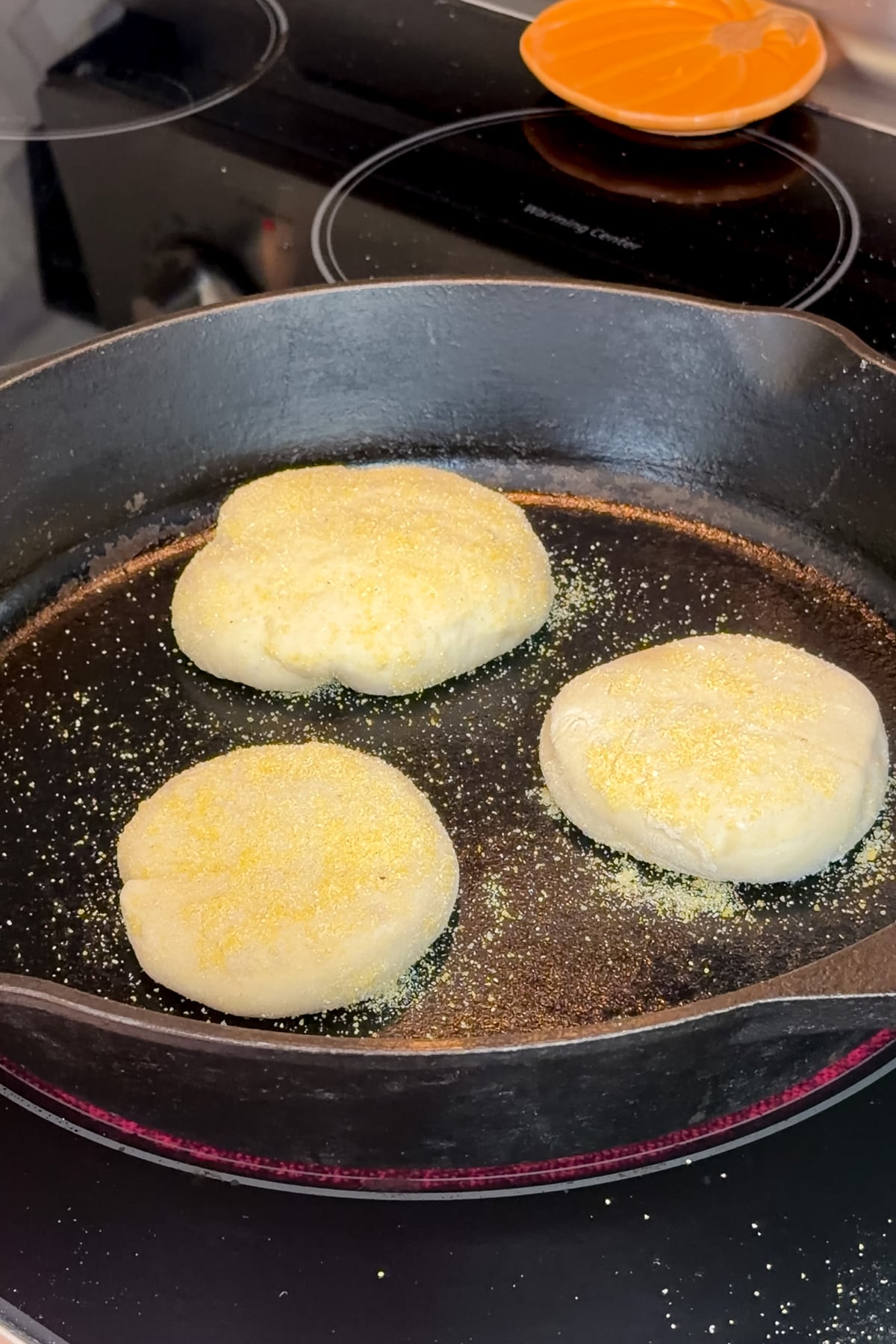
Step 5: Cook in a dry skillet. Preheat a cast-iron skillet or griddle over low to medium-low heat. Cook the muffins in batches for 6 to 8 minutes per side, until deeply golden, and finish in a 350°F oven for a few minutes if the centers need more time. The muffins are done around 200°F internal temperature.
Weigh your ingredients! Using a kitchen scale ensures accurate measurements, which is key to consistent baking results. It takes the guesswork out of measuring and helps your recipes turn out exactly as intended every time.
Expert Tips
- Keep the heat low and steady. Cooking too hot browns the outside before the center finishes; low to medium-low heat gives the inside time to cook through.
- Don't slice with a knife. Split cooked, cooled muffins by working a fork around the edge and gently pulling the halves apart; slicing flattens all those craggy pockets you worked for.
- Use a bench knife if you cut the dough. This dough is soft enough to sometimes stick to the counter even when it's floured; sliding a bench knife under each round lifts it cleanly without stretching or misshaping it, and you can reshape it in the cornmeal afterward if needed.
- Try the overnight option. Refrigerating the kneaded dough for 8 to 12 hours deepens the sourdough flavor even further, the same overnight retard I rely on in my fluffy sourdough discard cinnamon rolls.
- Check for doneness with a thermometer. An instant-read thermometer reading around 200°F in the center is the most reliable way to know they're fully cooked without cutting one open.
What Makes This Recipe Special?
Most English muffin recipes lean entirely on yeast, which means all of the rise and none of the sourdough flavor.
Folding in sourdough discard alongside the yeast gives you real tang and depth without an all-day ferment, the same discard-plus-yeast approach that makes my sourdough discard coffee cake loaf taste far more complex than a standard quick coffee cake.
Sourdough Discard English Muffins FAQs
Yes, active or unfed starter both work fine here since the instant yeast is doing most of the leavening work, the same discard-plus-yeast flexibility built into my sourdough discard pretzel bites.
That's expected. A soft, tacky dough is what creates the open, craggy interior; resist adding much extra flour.
Split and toast them for breakfast, or use them as the base for a batch of my sourdough French toast.
The stovetop method gives the most authentic texture and color, but you can finish partially cooked muffins in a 350°F oven if the centers need more time.
English Muffins Troubleshooting Guide
| Problem | Cause | Fix |
|---|---|---|
| Muffins are dense with no nooks and crannies | Extra flour was worked into the dough | Keep the dough soft and tacky; add flour only if it's truly unworkable |
| Outsides are dark but centers are doughy | Skillet heat was too high | Cook over low to medium-low heat, and finish in a 350°F oven if needed |
| Muffins didn't rise much | Yeast was old, or the rise happened somewhere too cool | Use fresh instant yeast and let the dough rise in a warm spot |
| Muffins are flat instead of tall | Dough was deflated too much during shaping | Press gently into a rectangle rather than rolling it out hard |
| Interior looks gummy after splitting | Muffins were sliced with a knife instead of fork-split | Fork-split cooled muffins to keep the pockets open and dry |
Storage
- Store cooled muffins in an airtight container at room temperature for up to 3 days, the same timeline I give for my sourdough discard sandwich bread.
- For longer storage, freeze for up to 3 months; fork-split them before freezing so they can go straight into the toaster.
Other Breakfast Recipes to Consider


Did you make this recipe?
If you try this recipe, I’d love if you left a quick rating and review below! It really helps support my blog and lets others know how the recipe turned out for you. Also, don't forget to tag me @kneadedthat on Instagram and use the hashtag #kneadedthat so I can see what you made and share it!

Sourdough Discard English Muffins
Equipment
- Stand mixer with dough hook
- Sheet pan
- Parchment Paper
- 3-inch round cutter (or skip it and shape the dough into balls by hand)
- Bench knife (optional, for lifting cut rounds cleanly)
- Cast-iron skillet or griddle
- Instant-read thermometer
Ingredients
- 120 g whole milk warm
- 120 g warm water
- 150 g sourdough discard 100% hydration
- 14 g honey
- 4 g instant yeast
- 360 g all-purpose flour
- 7 g fine sea salt
- 28 g unsalted butter softened
- Cornmeal or semolina flour for dusting
Instructions
- In the bowl of a stand mixer, combine the warm milk, warm water, sourdough discard, honey, and instant yeast. Whisk until mostly combined.120 g whole milk, 120 g warm water, 150 g sourdough discard, 14 g honey, 4 g instant yeast
- Add the flour and salt. Using the dough hook, mix on low speed until a shaggy dough forms, about 2 minutes.360 g all-purpose flour, 7 g fine sea salt
- Add the softened butter and continue kneading on medium-low speed for 6-8 minutes, until the dough is smooth, elastic, and very soft. The dough should be noticeably tacky and softer than a typical sandwich bread dough; avoid adding additional flour unless it's truly soupy and unable to hold together.28 g unsalted butter
- Transfer the dough to a lightly greased bowl and cover. Let rise in a warm place for 60-90 minutes, or until noticeably puffy and approximately doubled in size.
- Line a sheet pan with parchment paper and generously sprinkle it with cornmeal or semolina. Turn the dough onto a lightly floured work surface and gently press it into a thick rectangle about ½-¾ inch thick, without aggressively deflating it.Cornmeal or semolina flour
- Shape the muffins one of two ways. Either cut out rounds with a 3-inch cutter, using a bench knife to lift them cleanly off the counter (this dough sticks even when floured), and gently gather and reroll the scraps once to cut the remaining muffins; or, for an easier alternative with similar results, divide the dough into 10 pieces and roll each into a ball by hand. Transfer the shaped muffins to the prepared pan and press gently into the cornmeal or semolina to coat. You should get about 10 total.
- Sprinkle the tops with additional cornmeal or semolina. Cover loosely and let rise for 30-45 minutes, until the muffins look noticeably puffy.
- Preheat a large cast-iron skillet, griddle, or heavy-bottomed skillet over low to medium-low heat until thoroughly heated but not smoking. Carefully transfer several English muffins to the dry skillet, leaving room between them.
- Cook for approximately 6-8 minutes on the first side, until deeply golden brown, then flip and cook for another 6-8 minutes. Keep the heat relatively low so the outsides don't brown before the centers finish cooking.
- The muffins are done when both sides are golden brown and the centers reach approximately 200°F on an instant-read thermometer. If they're browning too quickly, reduce the heat, or transfer browned muffins to a 350°F oven for 5-8 minutes to finish cooking through.
- Transfer to a wire rack and cool completely before splitting.
Notes
- Don't slice English muffins with a knife. Insert the tines of a fork around the entire outside edge of the muffin, then gently pull the two halves apart to preserve the craggy pockets inside.
- For even more sourdough flavor, prepare and knead the dough as directed, then cover and refrigerate it overnight for 8-12 hours. The next morning, let the dough sit at room temperature for about 20-30 minutes, then shape, proof, and cook as directed.

Leave a Reply